Security that keeps renewable energy sites generating
Renewable energy sites are remote, largely unmanned, geographically dispersed across large land areas, and increasingly targeted. Gallagher protects that uptime with one platform for access control, perimeter detection, and intruder alarms, monitored centrally across every site whether or not anyone is standing on it.
For the broader critical infrastructure context, visit the Utilities and Critical Infrastructure industry page.
Security challenges for renewable energy sites
-
Convergence of physical and cyber threatsPhysical access is often the first step toward an operational or cyber incident, because reaching a controller, switchroom, or network cabinet puts the operational systems behind it within reach. Much of that equipment was built to run a process, not to withstand an intrusion, so the physical layer is frequently the easiest way to it. On remote, largely unmanned sites, that route is harder to watch and easier to overlook.
-
Fragmented, siloed systemsOn many sites, access control, video, intruder alarms, and workforce data sit in separate systems that don't share data, so there is no single record of who is on site or what has happened across the portfolio. Teams spend time reconciling those records by hand, and the gaps tend to fall exactly where one system hands off to the next. When an incident does occur, piecing together a single account from disconnected sources slows the response and weakens the audit trail afterward.
-
Large, open perimetersSolar farms and wind installations span tens or hundreds of hectares with long boundary runs that are inherently difficult to monitor. Copper cable theft has become a recognized risk for solar and wind sites worldwide, driven by high metal prices and the difficulty of securing long, remote boundaries. Equipment vandalism and organized theft are not random; sites without visible deterrence and active detection are selected targets.
-
Rotating workforcesA wind farm may see a different O&M team each fortnight. Battery storage installations require specialist contractor access for scheduled maintenance. Each visit requires new credentials, zone-specific access permissions linked to qualifications, and a clear record of who entered where and when. Managing this manually at scale across a multi-site portfolio is operationally unsustainable and a compliance liability.
-
Unmanned, remote sitesMost solar and wind installations have no permanent on-site personnel. Real-time intrusion response depends entirely on centralized visibility and automated alerting because there is no one on the ground to observe, report, or respond. When a breach occurs at an unmanned site, the gap between the event and the response is determined entirely by the quality of the detection and notification system.
Why renewable energy operators choose Gallagher

Designed and built in-house
Gallagher designs and manufactures hardware and software together in-house, making integration native rather than bolted on.

One connected ecosystem
Access control, intruder alarms, and perimeter security work together as a single ecosystem.

Built for remote sites
Centralized visibility and automated response stand in for on-site personnel across remote sites.

Interoperability
Command Centre links your security and operational technologies into one cohesive platform.

Secure by design
End-to-end cybersecurity, including AES 256-bit encryption, safeguards your data and the systems behind it.

Compliance-ready
Auditable, exportable access governance built for NERC CIP, WHS/OHS, and insurer reporting obligations.

Offline capabilities
Controllers enforce access policies on-site and keep making access decisions even if the server connection drops.

Proven in energy generation
Trusted by operators such as Contact Energy across multi-site power generation estates for more than 18 years.
Comprehensive renewable energy site security
Remote monitoring for even the most hard to reach locations ↗
A remote solar or wind farm cannot carry a full-time guard, so centralized visibility does the work instead. OneLink extends Command Centre to remote sites over a secure cloud connection, with no on-site server or VPN, so every site runs under one set of policies and alarms are flagged the moment they happen.
Perimeter security as your earliest warning ↗
At a remote site, the perimeter is the first line of defense for assets like copper cabling and inverters. Gallagher's Monitored Pulse Fencing pairs an energized barrier with instant detection, alerting Command Centre the moment the fence is disturbed, with confirmed events linked to CCTV and a timestamped record.
Access control that keeps pace with a rotating workforce ↗
Access at a renewable site has to keep pace with constant change, as crews rotate and contractors come and go. Command Centre ties zone access for high-voltage areas, switchrooms, and battery enclosures to verified qualifications, and time-bound credentials expire when the maintenance window closes.
Audit trails and critical infrastructure compliance ↗
For utilities, demonstrable access governance is a regulatory obligation, and the rules vary by market. Command Centre holds credential status, qualification records, and access history in one platform, so you can produce audit evidence directly from the system rather than assembling it by hand.
Physical and cyber, with no new path into OT ↗
Regulators don't treat physical and cyber as separate problems, and physical access is often the way into a cyber or operational one. Gallagher sits alongside your SCADA and OT networks, never on or through them, correlating access and alarm events into a shared audit trail without widening the attack surface.
Integrates with the systems you already use ↗
Command Centre works with your existing stack. Credentials and qualifications flow in from your HR, identity, and visitor management systems, while video integration links camera footage to perimeter alarms so each one arrives with visual confirmation.
Renewable energy security use cases
Offshore wind substations
Substations serving offshore wind farms sit on exposed, remote land that demands a high bar for both physical security and electrical safety. Gallagher's Monitored Pulse Fencing adds an energized detection layer to the site, with zone-based monitoring across the boundary fence, internal fence lines, and gate access points. Instant alerts to Command Centre give reliable early warning of unauthorized access while maintaining a timestamped detection record for incident response and insurance.
Multi-site generation portfolios
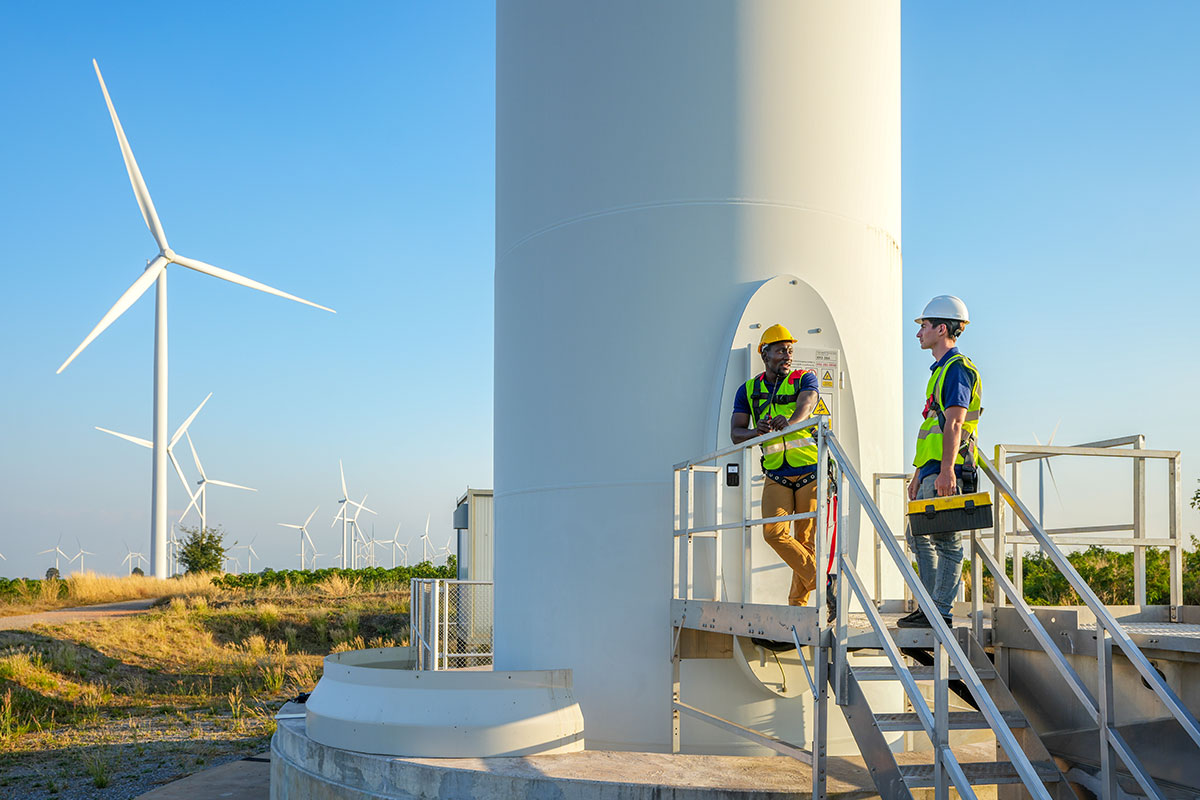
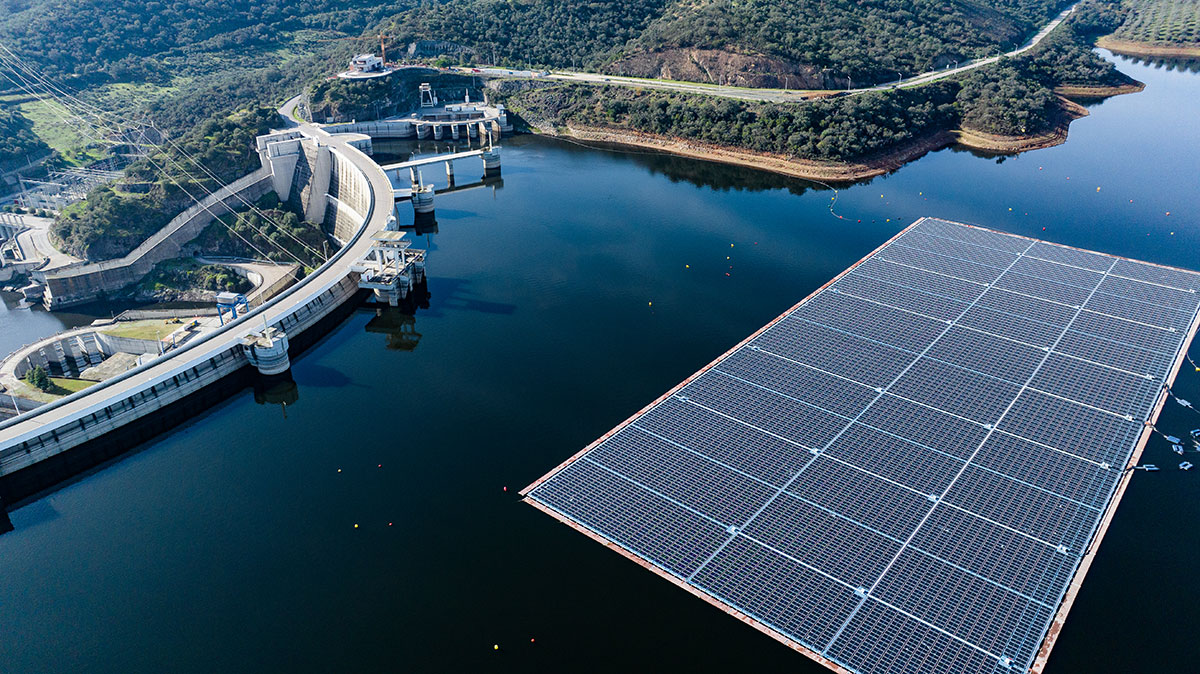
Power generation operators run hydro, geothermal, and other stations spread across wide areas, each needing assurance that only authorized people are on site. Gallagher's access control links qualifications and competencies to site access, with zone-based permissions that restrict entry to control rooms, high-voltage areas, and switchrooms. Integrated cameras give Command Centre live visibility at the gate, while a complete access audit trail supports emergency mustering and critical infrastructure compliance.
Get started with Gallagher renewable energy site security
Securing a portfolio of remote, unmanned renewable energy assets requires a platform built for that operating reality, not adapted from it. Gallagher's team works with asset managers, O&M operators, and site security managers to scope solutions that address the specific access, perimeter, and compliance requirements of solar, wind, and battery storage operations.
Frequently asked questions (FAQs)
-
Can Gallagher manage access for a portfolio of solar and wind sites from a single platform?Yes. Command Centre manages access permissions, alarms, reporting, and audit trails across multiple sites from a single interface. OneLink extends this capability to remote sites without requiring on-site server infrastructure at each location: Gallagher Controller 7000s connect to a central Command Centre deployment via a secure cloud connection. For an asset manager or security team overseeing a renewable energy portfolio, access policies are consistent across every site, and compliance reporting is consolidated at portfolio level.
-
Does Gallaghers system continue to operate if a remote site loses network connectivityYes. Gallagher controllers maintain access enforcement, alarm monitoring, and event logging locally during network outages. A loss of connectivity does not disable the access control or detection capability at the site. Events recorded during an outage are synchronized to Command Centre when connectivity is restored. For renewable energy sites in remote locations where network reliability is variable, this offline resilience means the security system does not fail when the connection does.
-
How does Gallagher handle access control for rotating O&M and contractor workforces?Time-bound credentials are issued for a defined maintenance or contract window and expire automatically when that window closes, removing the manual revocation burden. Mobile credentials extend this to remote sites where issuing physical cards to short-duration contractors is impractical. Access to specific zones, including high-voltage areas, can be linked to verified qualifications in Command Centre: if a required qualification expires, the associated access permission is revoked without manual intervention.
-
What perimeter security options does Gallagher offer for large solar or wind farm sites?Gallagher's Monitored Pulse Fencing is the primary perimeter detection layer for large renewable energy sites. Energized fencing with instant intrusion detection notifies Command Centre automatically when the fence boundary is disturbed. Adaptive alarm thresholds reduce false positives from wildlife, vegetation, and weather conditions common in the rural and semi-rural locations where most renewable installations are sited. Perimeter breach events are linked to CCTV verification where cameras are in place, and generate a timestamped record in Command Centre for compliance and insurance purposes.