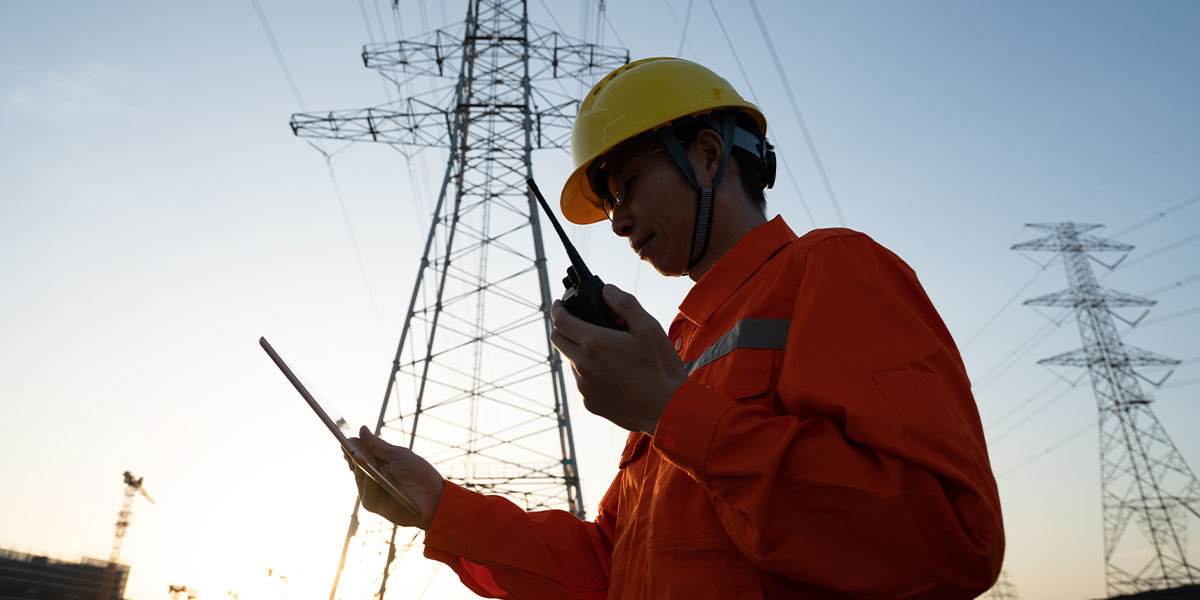
Keeping the lights on and the water flowing for millions of people is a high-pressure role that often goes unnoticed...until something goes wrong. If you're a cybersecurity lead or operations manager for a utility provider, you probably face a constant cycle of triaging alerts, running ransomware exercises, and worrying about that one unpatched flaw that could disrupt cities.
At Gallagher Security, we understand this daily grind. As a global provider of integrated security solutions, we've seen how the convergence of physical and digital threats is creating new vulnerabilities. This article outlines the key security challenges for utilities and explains how an integrated approach helps you stay resilient.
Key takeaways:
- Cyber threats are accelerating at an unprecedented rate. U.S. utilities saw 1,162 attacks in 2024, including a massive 234% year-over-year jump in Q3 alone.
- Breaches at unmanned remote sites can go unnoticed for hours, which is why 1 in 10 Australian cyber incidents now target critical public infrastructure.
- Bogotá Energy Group proved this by reducing door support battery requirements by 50% and cutting 300 plastic cards while migrating 600 users in under 20 days.
Understanding Today’s Utility Security Landscape
The environment for utilities is increasingly complex. You're likely managing a mix of legacy infrastructure and new digital tools while facing tighter regulatory oversight and intense public scrutiny. Protecting people, assets, and service continuity isn't just a site-level concern. It’s a matter of national security.
The data shows the threat is growing rapidly. U.S. utilities faced 1,162 cyberattacks in 2024. That’s a 70% increase from 689 the prior year. In the third quarter of 2024 alone, there was a 234% year-over-year jump, with an average of 1,339 weekly incidents. This isn't just a North American issue. In Australia, 1 in 10 cybersecurity incidents in 2024 hit critical public infrastructure like utilities.
Dispersed and remote sites make it hard to maintain a consistent view of risk. When security systems are siloed, you lose the ability to see the full picture. This lack of visibility is one of the biggest security challenges for utilities today. A breach at an unmanned substation can go unnoticed for hours if your systems don't talk to each other.
Keep Utilities Moving
Download the brochure for an overview of Gallagher’s utilities security solutions.
Security Challenge 1: Rising Cyber and Cyber-Physical Threats
Sure, digitalization has brought great efficiency, but it’s also opened new doors for attackers. The increased connectivity between your IT networks and Operational Technology (OT) means a cyber-attack can now have physical consequences. Ransomware, attempts to hijack control systems, and the targeting of remote access points are no longer hypothetical risks.
How Gallagher Can Help
- Gallagher platforms use a "security by design" philosophy to protect systems from unauthorized access.
- High-level encrypted communications and robust authentication ensure data integrity across your network.
- Real-time monitoring and alerts help you detect and respond to suspicious activity before it escalates.
- Utilities security solutions integrate with wider cybersecurity tools to create a layered defense for both data and physical assets.
Security Challenge 2: Physical Intrusions at Critical Sites
Physical threats like theft, vandalism, and sabotage remain a constant worry. Substations, pump stations, and depots are often located in remote areas, making them prime targets for intruders or even insider threats. These unmanned sites are particularly exposed because they don't have the "eyes on the ground" that a central office provides.
How Gallagher Can Help
- Monitored pulse fencing at the property line detects and deters climbers or cuts immediately.
- Integration of vehicle access control and intrusion detection into a single platform provides early awareness of breaches.
- Command Centre allows operators to monitor remote sites from a central hub with real-time alerts.
- Direct alerts ensure you can dispatch response teams to exact locations when a perimeter is compromised.
Security Challenge 3: Meeting Compliance and Regulatory Expectations
Utilities must meet strict safety and data protection standards. If your systems are fragmented, gathering data for an audit becomes a slow and manual process. You need reliable, consistent records to show you're meeting your obligations.
How Gallagher Can Help
- Command Centre generates automated reports to provide proof of compliance for audits.
- Audit trails show exactly who was on site and what actions they took in real time.
- Automated reporting supports alignment with global frameworks like ISO 27001 or NIST.
- Centralized control helps you enforce consistent security policies across every site in your network.
Security Challenge 4: Managing Remote and Distributed Sites
Managing hundreds of geographically dispersed assets is an operational headache. Travel time, limited on-site staff, and variable communications infrastructure make it hard to maintain control. You need visibility without having to put a guard at every gate.
How Gallagher Can Help
- Remote management capabilities allow you to control your entire security network from a central point.
- OneLink provides secure, simplified connectivity to remote sites, reducing IT complexity and improving visibility across your network.
- Cloud-enabled features integrated with Command Centre let your team manage tasks from any location.
- Support for mobile devices enables staff to check alarms or grant access while offsite.
- Integration with site management systems improves overall efficiency and ensures remote assets are as secure as headquarters.
Security Challenge 5: Demonstrating Value Beyond Protection
For utilities, security is no longer judged solely on its ability to prevent incidents. According to Gallagher’s 2026 Security Industry Trends Report, as infrastructure becomes more connected and budgets face increased scrutiny, security leaders are under growing pressure to demonstrate how their systems contribute to resilience, efficiency, and long‑term value.
How Gallagher Can Help
- Integrated security platform that reduces complexity
- Actionable security data that supports operational resilience
- Audit‑ready reporting and compliance confidence
- A platform designed to unlock long‑term value
Benefits of an Integrated Security Approach
The most effective way to overcome security challenges for utilities is through integration. When your access control, perimeter sensors, and alarms are all managed under one roof, you eliminate the gaps that attackers exploit. Gallagher's High Sec Controller 7000 further strengthens this integrated approach with hardened, high assurance access control built for the most sensitive operational environments.
An integrated approach helps you reduce risk by ensuring that every event is captured and contextualized. It provides a unified view of your security posture, making it easier for your teams to work together. This leads to faster incident response and a more resilient operation.
How Utilities Use Gallagher in Practice: Bogotá Energy Group
Bogotá Energy Group (GEB) manages a workforce of 2,300 across Latin America. They needed to move away from obsolete security systems toward a digital strategy focused on innovation and sustainability.
- The Problem: GEB required a scalable platform that offered interoperability across diverse sites. They needed to manage critical operation centers and offices from one interface while maintaining high cybersecurity standards.
- The Solution: GEB deployed Gallagher Command Centre to unify access control and video surveillance. They used the Gallagher API to integrate a custom visitor management app and implemented mobile credentials to secure remote headquarters without high installation costs.
- The Results: The Gallagher design reduced door support battery requirements by 50% and eliminated the printing of 300 plastic cards annually. This lowered both energy consumption and waste. Also, the intuitive interface allowed GEB to migrate its 600-user database in less than 20 days.
"Gallagher Command Centre is easy to learn and use," say GEB operators. No vulnerabilities have been reported since implementation, showcasing the digital protection of our critical infrastructure.
Next Steps: Moving Towards Integrated Security
If you're facing these challenges, you don't have to replace your entire system overnight. Improving your critical infrastructure security can happen in stages.
- Review Your Risks: Start with a risk-based review of your current systems to find the most critical gaps.
- Plan Your Modernization Path: Careful planning and a strategic approach can help reduce disruption when upgrading legacy access control systems.
- Identify Integration Wins: Look for opportunities to link your existing cameras or alarms into a central management platform like Command Centre.
- Engage an Expert: Contact Gallagher or an approved channel partner to discuss a roadmap that fits your budget and operational needs.
Taking these steps helps ensure your site is resilient and your people get home safely every day.