For many organizations, the idea of upgrading access control systems can feel daunting. The perceived risks including cost, disruption, and the unknown, often make sticking with legacy systems seem like the safer, more responsible choice. But in today’s rapidly evolving threat landscape, the real danger lies in standing still. Outdated access control systems can expose organizations to hidden costs, compliance headaches, and operational inefficiencies that quietly erode security and business resilience.
Despite these risks, resistance to upgrading remains strong. This resistance is rarely just about technology or budget. Instead, it’s often rooted in psychological, organizational, and cultural factors that are harder to see but even harder to overcome. Understanding and addressing these barriers is essential for Security Managers who want to future-proof their organizations and unlock the full value of modern access control.
Key takeaways:
- The greatest risk to your organization’s security isn’t upgrading, it’s standing still with legacy access control.
- Psychological, organizational, and cultural barriers often outweigh technical or cost concerns when considering upgrades.
- Modern access control platforms like Gallagher’s C7000 Product Range offer a future-ready path to smarter, more resilient security.
- Proactive upgrades deliver broader business value, including improved compliance, reduced manual processes, and better operational continuity.
Why Access Control Upgrades Feel Riskier Than They Are
It’s natural for organizations to hesitate before making changes to technology infrastructure. The fear of disruption, cost overruns, or unforeseen complications can make the status quo feel like the safest option. But these visible concerns rarely tell the whole story. Beneath the surface, factors like institutional inertia, fear of the unknown, and procurement frameworks designed for stability over innovation can create powerful resistance to change. In many cases, these invisible barriers outweigh any technical or financial considerations.
Security is, by nature, a conservative field. Security leaders are trained to minimize risk, not embrace it. The idea of migrating to a new platform can raise fears about accountability, control, and the reputational fallout of getting it wrong. These human concerns, though rarely acknowledged openly, often carry more weight than any technical specification or cost analysis.
Top Three Barriers to Access Control Upgrades
1. Procurement Processes and Technical Debt
Many organizations have procurement and budgeting processes optimized for predictability, not agility. Requests for proposals (RFPs) often mirror existing systems, making it difficult to introduce transformative solutions. Meanwhile, legacy systems accumulate technical debt such as outdated protocols, hard-coded integrations, and dependencies that make upgrades seem daunting. The longer a legacy system is in place, the more complex and costly it becomes to untangle.
2. Budget Constraints
Upfront costs are often cited as a primary reason for delaying upgrades. However, this perspective overlooks the full lifecycle costs of maintaining legacy systems, including patchwork fixes, increased support needs, and lost productivity. The myth that switching is always more expensive persists, but organizations that have undergone successful transitions often report the opposite. When full lifecycle costs are considered, integrated systems frequently deliver greater returns, thanks to reduced manual processes, lower support and maintenance costs, and improved compliance.
3. Cultural Resistance
Security teams are often cautious by design. The idea of migrating to a new platform can raise fears about accountability, control, and the reputational fallout of getting it wrong. These human concerns, though rarely acknowledged openly, often carry more weight than any technical specification or cost analysis. Even when a new solution clearly outperforms the existing one, organizational momentum favors the status quo.
The True Drivers for Access Control Transition
While barriers to change are real, so are the forces making legacy access control unsustainable. Several external and internal drivers are pushing organizations to reassess their systems:
Regulatory Complexity
Compliance requirements are increasing across all sectors and access control systems are central to meeting them. Modern platforms record access events and generate automated reports to demonstrate compliance with frameworks like GDPR, PCI DSS, and HIPAA.
In high-security sectors, regulations often mandate certified solutions, such as NPSA-approved systems in the UK, to meet national security standards. Choosing a future-ready, government approved platform like the Gallagher Controller 7000 Product Range helps organizations stay compliant and avoid costly gaps.
As regulations evolve, legacy systems may struggle to keep up with compliance needs and approvals, exposing organizations to compliance risks and potential penalties.
Aging Infrastructure
Unsupported or obsolete systems introduce hidden costs through patchwork fixes, security vulnerabilities, and manual workarounds. As manufacturers phase out support for older hardware, organizations face increasing cyber threats, compliance failures, and diminishing returns from maintaining outdated infrastructure.
Organizational Transformation
Growth, acquisitions, and hybrid operational models expose the inefficiencies of fragmented security systems and push decision-makers to consider platforms that can scale with the business. Modern platforms enable centralized management across multiple sites and deliver critical business insights. Access data can support space optimization, streamline HR processes, and improve operational efficiency. Security is evolving from a cost center into a strategic tool and legacy systems simply can’t deliver this level of integration.
Triggering Events
Often, the most common time organizations consider upgrading is after a break-in or cybersecurity incident, when the cost of inaction becomes painfully clear. Waiting for a crisis to prompt action can be costly, both financially and reputationally.
Why Businesses Need Modern Access Control
Today’s enterprise environments demand more from access control than ever before. Integrated, multi-functional platforms are no longer a luxury, they’re a strategic enabler. These platforms unify access, alarms, and other security and business functions within a single interface, enabling centralized management, rapid response, and consistent compliance across multiple locations.
Crucially, these systems generate a wealth of data that organizations can leverage for operational insights and smarter decision-making. By analyzing access patterns, businesses can optimize workspace utilization, improve employee experiences, and even enhance productivity. The business value goes beyond security:
- Reduced Manual Processes and Lower Support Costs: Automation and integration reduce the need for manual interventions, freeing up resources for more strategic tasks.
- Faster Compliance Reporting and Better Data Insights: Modern platforms provide real-time data and analytics, making it easier to demonstrate compliance and make informed decisions.
- Improved Business Continuity and Operational Resilience: Resilient, future-ready systems minimize downtime and ensure that security keeps pace with organizational growth and change.
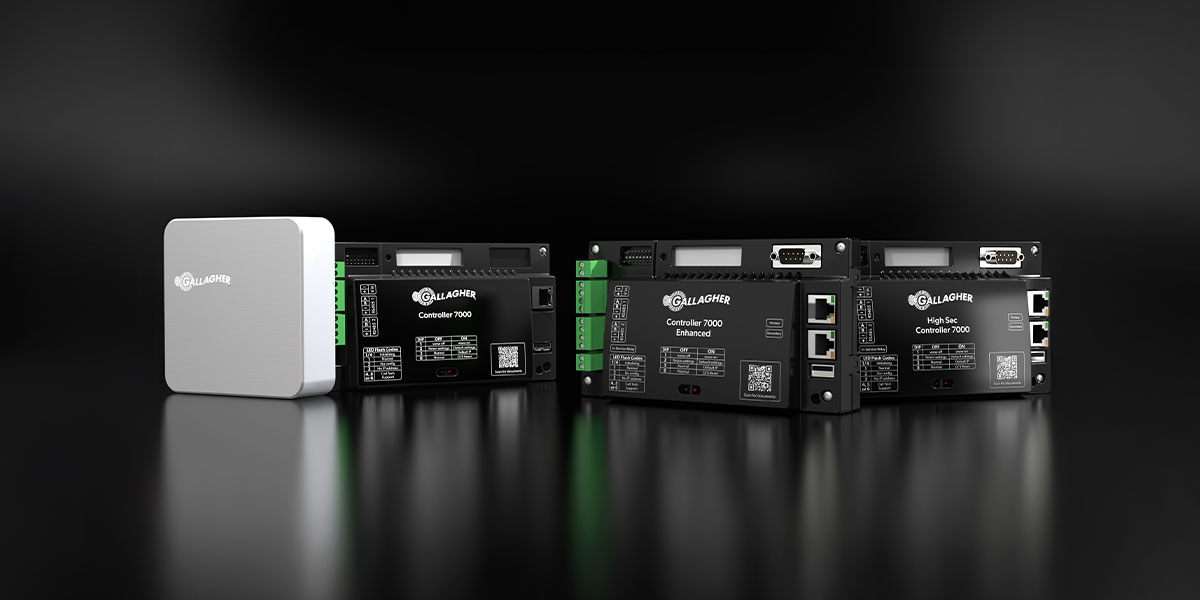
Platforms like Gallagher’s Controller 7000 (C7000) Product Range not only meet these needs, but also deliver advanced cybersecurity, support future growth and integration, and adapt to evolving compliance requirements. Designed to be the backbone of a modern, integrated security environment, the C7000 Product Range enables organizations to respond quickly to new challenges and opportunities.
The Controller 7000 Product Range: Made for More
The Gallagher C7000 Series is purpose-built to address both the technical and organizational challenges of access control upgrades. Key features include:
- Seamless Migration: The C7000 shares the same footprint as the C6000 (excluding the Single Door variant), making physical upgrades straightforward. For sites moving from other systems, QuickSwitch platform enables a smooth, streamlined migration to the Gallagher ecosystem including C7000 controllers. With dedicated upgrade tools and phased rollout options, organizations can minimize disruption and transition at their own pace.
- Integrated, Cybersecure, and Scalable Architecture: Built to meet and exceed modern cybersecurity standards, the C7000 offers hardware-based cryptographic protection, secure boot, and compliance with global standards. Its scalable design supports everything from single-door installations to large, multi-site deployments.
- Unified Hardware and Software: The C7000 and Gallagher's Command Centre software combine to deliver a fully integrated security ecosystem, unlocking additional value through advanced functionality, centralized management, and continuous innovation, ensuring your system remains scalable, resilient, and ready for the future.
- Future-Ready Platform: All new features and innovations will be built on the C7000 platform, ensuring long-term relevance. The C7000 is the only controller range supporting OneLink connectivity, extending enterprise-grade security to remote, hard-to-reach, or infrastructure-only sites, without the need for on-site servers or IT configuration.
With the C7000, organizations can confidently transition to a future-ready platform that delivers smarter, more resilient security, without the risks typically associated with major upgrades.
The Path to Future-Ready Security
The biggest risk to your organization’s security isn’t upgrading, it’s standing still. As operational complexity rises and security becomes more embedded in business continuity and compliance, the cost of inertia grows. By treating access control migration as a strategic evolution, not just a technical project, Security Managers can unlock new value and position their organizations for a smarter, more resilient future.
Modern access control is about more than just keeping doors locked. It’s about enabling business growth, supporting compliance, and ensuring that security infrastructure can adapt to whatever the future holds. The Gallagher C7000 Product Range is designed to help organizations overcome the barriers to change and realize the full benefits of a modern, integrated access control platform.
Ready to overcome the barriers to access control upgrades? Don’t wait for a crisis to force your hand. Reach out to Gallagher for a consultation or to learn more about how the C7000 Series can help your organization move forward with confidence. Discover how a proactive approach to access control can deliver lasting value, resilience, and peace of mind.