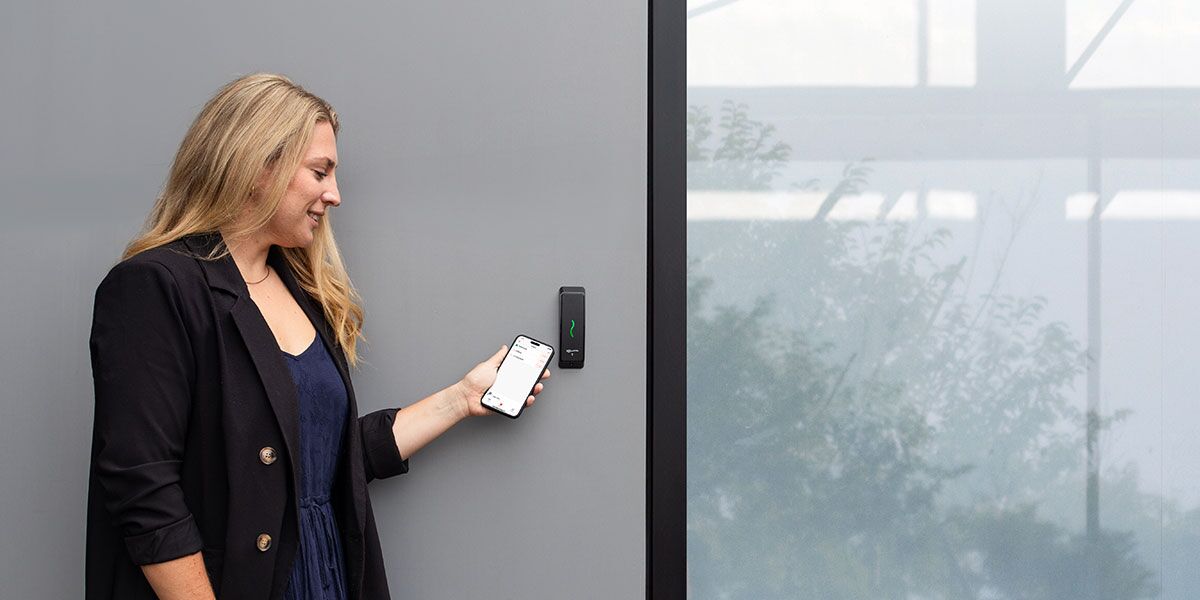
Physical security is the combination of employee and visitor access control, perimeter protection, surveillance, intrusion detection, and employee awareness that an organization uses to protect its people, property, and assets from unauthorized access, criminal activity, and disruption. It covers the systems and the behaviors around them: the controller that locks a door and the habit of not holding that door for a stranger.
Each of these measures does a job on their own. Risk is ultimately minimized most when they work together as one system, sharing information and responding as a coordinated whole. This guide explains what physical security covers, why it matters beyond preventing incidents, and which five measures deserve a place in every security program.
Key takeaways
- Physical security spans five connected layers, from access control and visitor management at the door out to perimeter security, surveillance, intrusion detection, and employee training. Managing them as one system is what reduces risk.
- The return on physical security extends past incident prevention into smoother operations, easier regulatory compliance, and stronger employee retention.
- Integrations, cloud connectivity, and AI-assisted detection now let these layers share information and response as a coordinated system.
- A locked door is only as secure as the person who doesn't hold it open for someone they don't recognize. Technology and training have to work together.
Defining physical security
Physical security refers to the measures and techniques employed to protect an organization's tangible assets, including people, property, and resources, from unauthorized access, criminal activity, and natural disasters. It sits alongside cybersecurity as a distinct discipline, though the two increasingly overlap. A modern door controller is itself a networked device, which is why Gallagher Security builds its Controller 7000 range with cybersecurity at the core, including trusted device authentication, so the hardware that protects a site is protected too.
Why physical security is important
Physical security protects the people inside a facility as well as its assets. Increasingly, it also protects an organization's ability to show it took reasonable care. Threats now range from cyberattacks that cross into physical systems to extreme weather events. Businesses that plan for both are better placed to keep operating when something goes wrong.
Physical security technology helps businesses to deter, detect, and respond to threats as well as mitigate the financial and emotional cost of workplace incidents when they do happen. For many industries, it also fulfills a legal or regulatory obligation.
People complete the picture. Physical security training equips employees with the judgment to recognize and report suspicious activity, which is why awareness belongs on the same list as the hardware.
Common physical security threats
Physical security threats can take many forms. A risk assessment that only considers one of them creates gaps.
- Theft: Unauthorized people gain access to a facility to remove valuable items, often causing damage in the process.
- Vandalism: Deliberate defacement or destruction of property leads to repair costs and operational disruption.
- Threats to employee safety: Workplace violence, minacious intruders, and hazardous materials endanger employees, customers, and visitors, and can damage morale and reputation.
- Natural disasters: Fires, extreme weather, and earthquakes damage a facility and its contents, independent of any human intent..
A physical security risk assessment is the starting point for addressing all four. It identifies an organization's specific vulnerabilities and highlights which of the measures below matter most for a given site.
Five essential physical security measures
Most organizations typically implement some combination of five physical security measures, guided by findings from their risk assessment. A mature security program accounts for all five physical security methods. A physical security system that only covers one or two, such as the fence line but not the front desk, leaves the rest exposed.
1. Employee and visitor access control
Physical security access control regulates who can enter a space or use a resource, and when. A physical access control system (PACS) enforces that policy automatically.
The demands of a PACS grow with the business. Gallagher Security's Controller 7000 range is designed for that growth, supporting everything from a single door to 10,000 controllers on one server. On the credential side, Gallagher's T-Series readers support employee badge in Apple Wallet and other forms of mobile credentials alongside traditional MIFARE and smart cards, so a mobile-first access policy doesn't require ripping out existing card infrastructure.
Visitor management extends the same control to people who aren't employees, including contractors, delivery drivers, interview candidates, and guests. With visitor management, powered by Kenai, hosts can pre-register visits, credentials expire automatically at the end of the visit window, and the system logs every arrival. Those records sit in Command Centre alongside employee access and alarm events, so the security team has a complete view of who was on site and when.
2. Perimeter security
Perimeter security protects the boundary of a site before an intruder reaches the building. An effective perimeter system works to deter, detect, delay, and respond, in that order, so the building's internal defenses become a backup layer rather than the first line of defense.
National Mini Storage has used Gallagher's perimeter solution to deter and detect intruders across its Auckland sites since 1991. "Gallagher is all we've ever used because it gets the job done," says Ryan Coom, the company's Brand and Innovations Manager. The Gallagher Monitored Pulse Fence sits at the heart of that system. It pulses every 1.2 seconds, delivering a safe but unmistakable deterrent to anyone who touches it, and raises an alarm when the fence is under attack.
3. Surveillance systems
A surveillance system is a network of cameras and monitoring devices that detect, record, and deter unauthorized activity. It gives a business visibility and evidence it would otherwise lack.
Command Centre integrates with third-party video management systems (VMS) and brings video into the same operating picture as access control, alarms, and perimeter events. If someone forces a door, the alarm and the footage of that moment arrive together as one incident. Operators can assess and respond immediately, without switching between systems to piece events together.
4. Intrusion detection systems
An intrusion detection system identifies unauthorized access or malicious activity within a space. It then alerts the right people and triggers the right response the moment it happens. Command Centre manages intrusion, duress, and fire alarms alongside access control, with alarm zones that arm and disarm on schedules the business sets.
Speed matters most when people are at risk. Harrisburg School District in South Dakota relied on that speed in 2015, when a shooting took place at its high school. From the moment staff pressed the emergency button, Command Centre locked all external doors, notified district authorities, and restricted building access to emergency responders only in just four seconds.
5. Security awareness and training for employees
Employees play a direct role in preventing, detecting, and responding to security threats, and much of that role sits outside the technology. Tailgating is the clearest example. Holding a door for someone without a badge feels like basic courtesy. That instinct makes tailgating a common way past a well-designed access control system, with no technical defeat required.
Regular training should cover recognizing and reporting suspicious activity, following access control protocols without exception (including for people who seem like they belong), and responding to emergencies.
The role of technology in physical security
Physical security is moving from disparate point solutions toward coordinated ecosystems. Three forces are driving that shift.
- Integrations and unified platforms. Unified platforms like Command Centre bring access control, alarms, perimeter events, and visitor workflows together, so a security operator sees one coherent picture of a site.
- Cloud connectivity. Cloud solutions add automatic updates, richer data, and remote management, so a security team can make changes without being on site.
- Artificial intelligence. AI is an emerging capability and already being used to identify unusual patterns or behaviors in real time and flag them before they escalate.
Examples of successful physical security implementations
Physical security examples span across diverse industries from education to mining and corrections, each experiencing various benefits. At Harrisburg School District, the value was measured in seconds during an emergency. At National Mini Storage, it has been measured in decades of quiet deterrence.
AT Brown (Coaches) Ltd, a family-run coach operator in Telford, England, faced repeated diesel theft and equipment damage from thieves cutting through its security fence. A retrofitted Gallagher Monitored Pulse Fence, installed around the existing boundary, stopped the thefts without the cost and disruption of a full perimeter rebuild.
Across a school, a storage company, and a transport operator, the common thread is a measure matched to the actual threat on each site.
The long-term benefits of investing in physical security
Physical security for businesses isn’t only about addressing immediate threats. Over time, they also build advantages that often outlast the incident they were bought to prevent.
- Improved business operations. Physical security reduces downtime from theft and vandalism, and automation takes routine work off staff. Visitor management, credentialing, time and attendance, and even building systems such as lighting can all run through the same platform.
- Regulatory compliance. Banking, healthcare, education, and government all carry specific physical security obligations. A system that documents access and incidents automatically turns compliance into a byproduct of normal operation, with audit-ready records available when they're needed.
- Talent attraction and retention. Banking, healthcare, education, and government all carry specific physical security obligations. A system that documents access and incidents automatically turns compliance into a byproduct of normal operation, with audit-ready records available when they're needed.
Frequently asked questions (FAQs)
What is physical security?
Physical security is the set of measures, both technological and procedural, that organizations use to protect their people, property, and assets from unauthorized access, damage, or harm.
What is physical security in the workplace?
Physical security in the workplace, sometimes called workplace security, is physical security access control and procedure applied to an employee's day-to-day environment: controlled entry at the doors people use every day, visitor oversight for anyone who isn't staff, emergency response planning, and a culture where people follow the protocols in place rather than treating them as someone else's job.
What are the 4 types of physical security?
Most frameworks group physical security into four types. Deterrence discourages an attempt through fencing, lighting, and signage. Detection identifies an attempt through sensors, intrusion alarms, and surveillance. Delay slows an intruder with locks, barriers, and reinforced access points. Response covers alarm notification, emergency lockdown, and on-site or remote intervention.
What are the 5 D's of physical security?
The 5 D's are deter, detect, delay, deny, and defend. They describe the sequence a well-designed system follows, from discouraging an attempt before it starts to actively defending people and assets if an intruder gets past every earlier layer.
What are some examples of physical security measures?
Common physical security examples include access-controlled doors and badge readers, perimeter fencing and gate systems, CCTV surveillance, intrusion alarms with monitored sensors, and visitor management systems that issue temporary credentials. National Mini Storage’s monitored pulse fence and Harrisburg School District’s four-second lockdown response are real-world examples of these measures in practice.
What's the best physical security for businesses with limited budgets or multiple small sites?
There isn't a single answer, since it depends on site size, the value of what's being protected, and what a risk assessment turns up. A small or mid-sized business, or a company with several branch locations, usually gets the most cost-effective result by starting with a physical security system built around access control and intrusion detection at each site, then adding perimeter protection and visitor management as the business grows, rather than trying to solve every layer at once.
Take the next step toward better security
Ready to strengthen your organization's physical security? Contact our team today to schedule a consultation and discover how tailored security solutions can protect your people, assets, and business for the future.