Data Center Physical Security From Perimeter to Rack
Written by
Written by
Friday, 24 Jul, 2026
Data centers sit at the center of a strange contradiction. They are among the most heavily secured facility types in the world, with perimeter fencing, mantraps, biometric readers, and 24/7 monitoring, and yet, ask anyone who has actually had to operate one, and you'll hear a more complicated story. Multi-tenant facilities share keys across cabinets. Insider access goes unreviewed for months. A facility says its access controls are airtight, and until an audit or incident tests that claim.
None of that means data center security is broken. It means physical security in this environment is a genuinely layered problem and the layer that gets the least attention publicly, what happens once someone is inside the building, is often the one that matters most.
This guide walks through the physical security layers that matter in a data center, the threats each one addresses, the standards operators are held to, and the questions a Security Manager running a multi-tenant site should be able to answer with confidence.
Physical security in a data center is the combination of technology, personnel, and process that governs who can enter a building and what happens if they try to go somewhere they shouldn't. It typically works in layers, moving from the outside in.
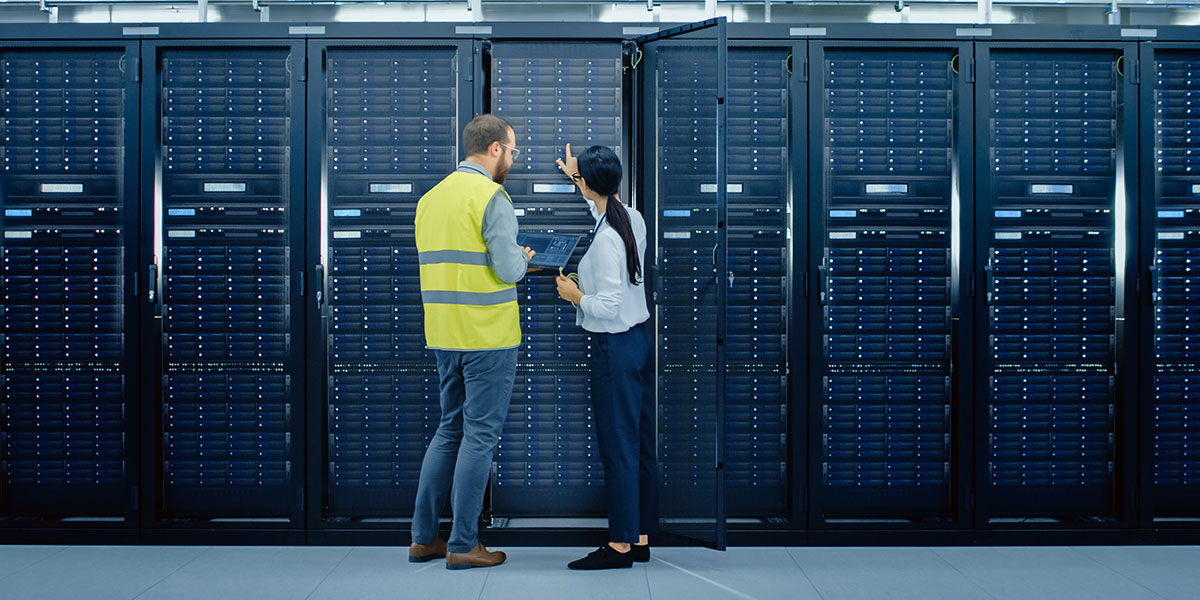
Each layer is designed to catch what the previous one misses. A determined actor who talks their way past reception should still be stopped by data hall access control and someone who gets into the data hall through legitimate means shouldn't be able to open a cabinet that isn't theirs. That last point is where a lot of real-world facilities quietly fall short, and it's worth understanding why.
Hard drives, network equipment, and cabling are valuable and portable. Once someone has unsupervised time at an open rack, the damage can happen in minutes. Stolen data, disabled systems, and planted hardware are all possible in that window.
External breaches make headlines, but the person with a legitimate badge is a far more common risk. Employees and contractors who retain access after their role changes, or whose access was never scoped tightly in the first place, are a persistent vulnerability in facilities of every size.
Colocation environments introduce a problem that single-tenant data centers don't have. Other tenants' equipment sits in the same room, sometimes the same row. When cabinet keys aren't managed individually, a surprisingly common shortcut in shared facilities, one tenant can end up with physical access to another's hardware entirely by accident. It's a real operational risk, not a hypothetical one, and it's one of the main reasons facility consistency matters as much as facility size.
Convincing a front desk that a maintenance visit is scheduled, or that a uniform is legitimate, remains one of the lowest-cost ways to get through a perimeter. Verification needs to hold up under pressure, not just on paper.
Fire, flood, and power loss remain leading causes of data center downtime, and they call for a different kind of physical security, one built on environmental monitoring, redundant power, and tested response plans rather than access control alone.
Strong data center physical security solutions combine several layers working together, rather than relying on any single control.
For most operators, data center physical security is a regulatory obligation. ISO 27001 and SOC 2 both require documented, auditable physical access controls as part of information security certification. PCI DSS and HIPAA impose similar requirements wherever payment or health data is stored. In the UK, data centers now sit within Critical National Infrastructure, meaning stronger expectations around incident reporting, supply chain security, and NPSA-endorsed access control. In Australia, ISM, PSPF, and Essential 8 alignment is increasingly expected of any facility handling sensitive government or enterprise workloads.
What ties all of these together is the same requirement. A system has to produce evidence, not just enforce a rule. Automated, audit-ready reporting turns a security control into something that actually satisfies an auditor. That means logs showing who accessed which zone, when, and whether the access was authorized.
If you're responsible for security at a colocation or multi-tenant facility, these are the questions worth being able to answer with confidence, because your tenants are asking them whether they say so directly or not:
That last point matters more than it might seem. Multi-site consistency is a common gap. A facility manager overseeing several locations of different ages and configurations often finds that "secure" means something different at each one, which makes it hard to guarantee the same standard of protection to every tenant. Closing that gap, so that "secure" means the same thing at every site in your portfolio, is one of the clearest ways to build lasting trust with the tenants who depend on you.
Looking for a unified, audit-ready security platform that covers perimeter to the individual rack? Explore our data center security solutions or contact us to walkthrough your facilities requirements.