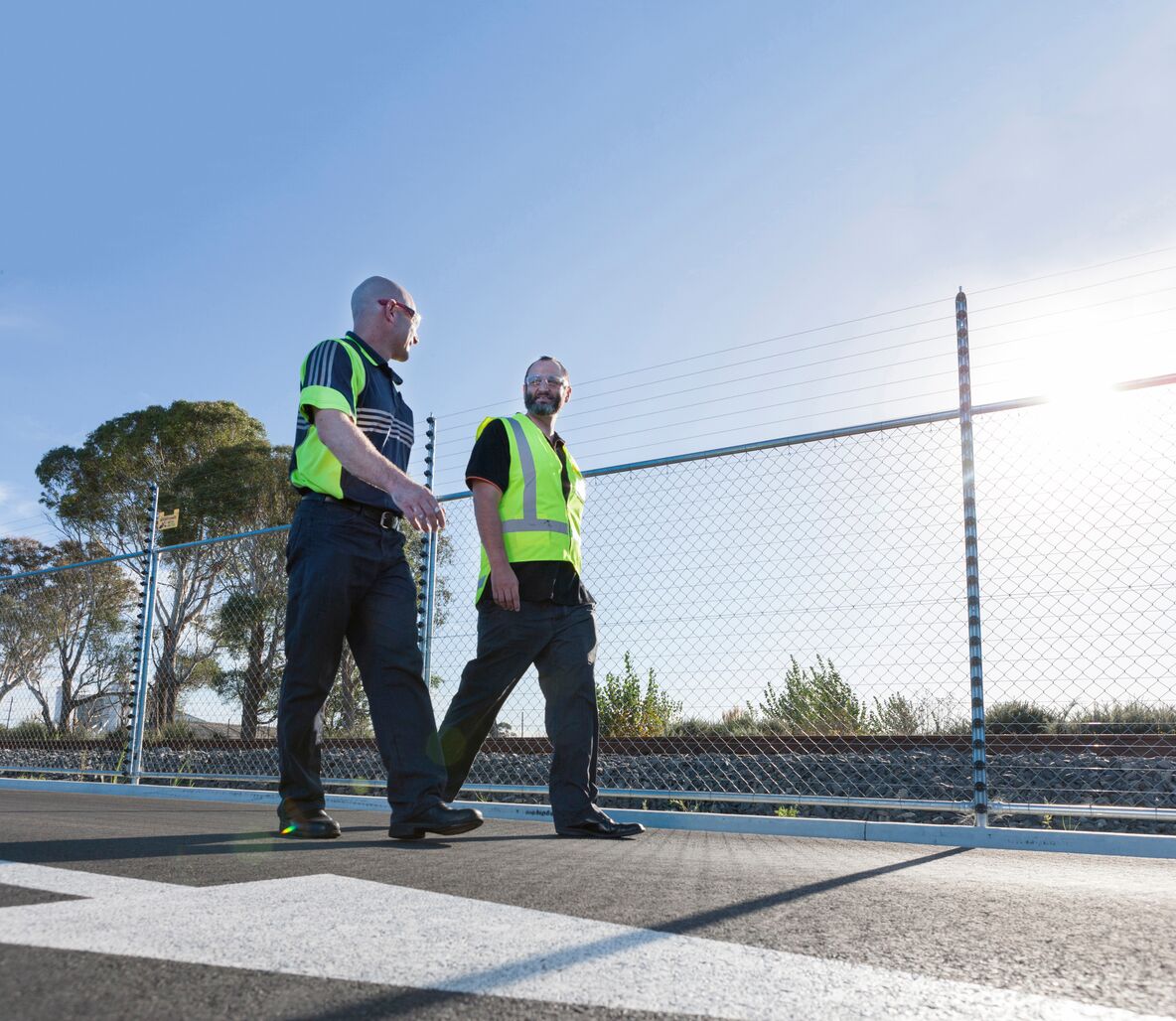
Perimeter protection is the foundational layer of physical security that prevents, detects, and delays unauthorized access at a site’s boundary. For businesses, it reduces the likelihood of theft, vandalism, sabotage, and operational disruption by stopping threats before they reach people, buildings, or critical systems. Effective perimeter protection combines physical barriers, electronic detection, and operational response into a layered security model that is measurable, auditable, and scalable.
This article explains what perimeter protection is, why it is critical for modern organizations, and how different technologies work together to protect high‑value and high‑risk sites.
Key Takeaways
- Perimeter protection is the earliest point of threat detection.
- Systems should be designed to deter, detect, and delay intrusions.
- Layered technologies provide resilience
- Integration with response processes is essential for real world effectiveness.
What is Perimeter Protection?
Perimeter protection refers to the controls applied at the outer boundary of a property to manage and monitor the movement of people and vehicles. Its primary function is to ensure that only authorized individuals and assets can enter a site while providing early warning of intrusion attempts.
Perimeter protection focuses on early detection and deterrence. Detecting an intrusion at the fence line or boundary provides valuable response time, enabling security teams to act before a threat escalates.
Effectively answering how to secure the perimeter of your site requires integrating several components:
- Physical barriers (fencing, walls, bollards, gates)
- Electronic detection systems (energized fencing, vibration sensors, fiber‑optic cable detection)
- Surveillance technologies (CCTV, thermal cameras)
- Access control at perimeter entry points
When integrated, these elements form a layered defense that is significantly more effective than any single control in isolation.
Why Perimeter Protection is Critical for Businesses
Perimeter protection serves as the first line of defense against external threats. Once an intruder reaches a building or internal system, the cost and complexity of response increase significantly. Perimeter security can provide detection and deterrence, alerting the business and emergency services to potential security threats while delaying and preventing any loss or damage due to burglaries or other criminal acts.
Organizations in high‑risk and regulated environments including utilities, mining and remote facilities, transport and logistics yards, manufacturing, healthcare, and government, use perimeter controls to maintain continuity of essential services and reduce the probability of targeted disruption.
In these sectors, perimeter security for enterprises is a matter of operational resilience, a single breach can result in safety incidents, regulatory penalties, or national‑level disruption. Furthermore, while primarily physical, it is increasingly understood that perimeter access control is important in cybersecurity. By securing the physical boundary, organizations protect the hardware and servers that house critical digital assets from direct tampering.
From a risk management perspective, perimeter protection delivers three measurable outcomes:
- Reduced likelihood of intrusion through visible deterrents
- Earlier detection of unauthorized access attempts
- Increased response time for security or law enforcement
A perimeter strategy that detects and verifies activity early, produces better loss outcomes than detection that starts only after a breach has occurred inside the facility.
The Three Core Functions of Perimeter Protection
An effective perimeter protection system is designed around three operational principles: deter, detect, and delay. To improve perimeter security, an organization must optimize each of these layers.
Deter
Deterrence reduces the probability of an attack occurring at all. Visible fencing, signage, lighting, and energized perimeter systems increase the perceived risk for intruders and often redirect opportunistic threats to softer targets.
Detect
Early detection is the most critical technical requirement. Detection technologies identify cutting, climbing, lifting, or tampering attempts at the boundary. Examples include:
- Monitored pulse (energized) fencing
- Vibration and tension sensors
- CCTV
Detection at the perimeter provides actionable alerts while the intruder is still outside the protected area.
Delay
Delay mechanisms slow an attacker long enough for a response to occur. This is achieved through barrier strength, fence height, anti climb features, and controlled vehicle access points. Even seconds of delay can be operationally significant when response procedures are well defined.
Designing an Effective Perimeter Protection Strategy
There is no universal perimeter solution. Effective design depends on site‑specific factors such as:
- Threat profile and risk tolerance
- Site size, geometry, and terrain
- Environmental conditions (wind, wildlife, temperature extremes)
- Operational requirements (vehicle throughput, staff access)
- Response capability
When determining how to secure the perimeter of your site, best‑practice perimeter protection design aligns technology selection with response capability. Detection without response procedures provides limited value. Mature security programs integrate perimeter alerts into centralized security platforms, enabling correlation with access control, video, and incident management systems.
Perimeter Protection as Part of a Layered Defense
Perimeter protection is most effective when integrated with:
- Access control systems for identity‑based authorization
- Intrusion detection inside buildings
- Security operations and monitoring personnel
- Documented incident response procedures
This layered approach reflects established security engineering principles and is widely adopted across regulated and high‑risk industries.
Perimeter protection is no longer a standalone physical barrier; it is an engineered security control that combines deterrence, early detection, and delay with clearly defined response procedures. As threat profiles evolve and international safety standards place new requirements on technologies like energized fencing, organizations must design perimeter systems that balance safety, compliance, and security effectiveness.
A well designed perimeter protection delivers its greatest value when it is planned as part of a layered security model, aligned to site specific risks and operational realities. Early detection at the boundary provides the time and information needed to prevent incidents from escalating, protecting people, assets, and continuity of operations.
Ready to secure your perimeter? Contact our team today.