
Power grids, water plants, and transport hubs cannot afford downtime, which means security is everything. Critical infrastructure protection goes beyond locking doors. It's about using intelligent access control as the central system to protect your people and assets, and guarantee uptime. This article explains why security teams must stop relying on slow, siloed tools, and instead, adopt one unified platform for comprehensive 24/7 protection.
Key takeaways
- Replace siloed tools with a unified platform that integrates all security components for real-time visibility and effective critical infrastructure protection.
- Use modern access control to automate enforcement (like fatigue and traceability), quickly generating audit evidence to minimize compliance risk and manual burden.
- Extend centralized control to every remote site via OneLink, eliminating vulnerabilities like old lock-and-key access.
Why essential services need stronger access control
Stronger access control is non-negotiable for essential services. Here are just some of the serious financial and operational costs associated with physical security threats.
- Operational & Labor Cost: Inefficient physical security relies on manual processes (lock-and-key, paper logs) that inflate labor costs. Automation directly mitigates this burden.
- Compliance & Audit Risk: Fragmented or inadequate user access control in critical infrastructure increases the risk of compliance violations and operational delays.
- Business Impact & Investment: Weak physical security leads to real financial harm and penalties. Conversely, the growing $10.86 billion global market reflects increasing investment to mitigate incident costs and achieve operational efficiency.
Common security gaps that put sites at risk
The primary weaknesses in current physical security that undermine critical infrastructure protection often stem from three main systemic gaps.
- Siloed Systems & Blind Spots: Security tools (access control, video, alarms) that do not communicate create dangerous blind spots and slow, uncoordinated responses.
- Manual Process Bottlenecks: Relying on paper logs or manual processes for contractor access control is highly susceptible to human error, security risks, and operational bottlenecks.
- Limited Remote Visibility: Geographically disperse and remote sites often lack electronic access control, leaving security teams with limited visibility into remote or unmanned sites after hours, significantly increasing risk.
How modern access control prevents disruption
Modern access control is the guardrail that keeps operations running smoothly. It ensures only the right people get into sensitive areas like control rooms using multi-factor and role-based access, and it instantly enforces rules like anti-tailgating. Best of all, it's smart. If a user attempts to violate a security policy, the system automatically triggers responses, changing door states or pulling up video, so your team can react immediately.
Why integration matters at high-risk sites
Integration is the critical step that unifies systems for effective critical infrastructure protection.
- Faster, Smarter Triage: Connecting access control events with alarms and video instantly verifies incidents, enabling faster, more informed responses.
- One Source of Truth: Centralized monitoring eliminates guesswork by giving operators a single, cohesive view, and cutting time from detection to resolution.
- Audit-Proof Documentation: Integrated logs and timelines automatically create a clear record of every event, simplifying incident reviews and compliance reporting.
Keep Utilities Moving
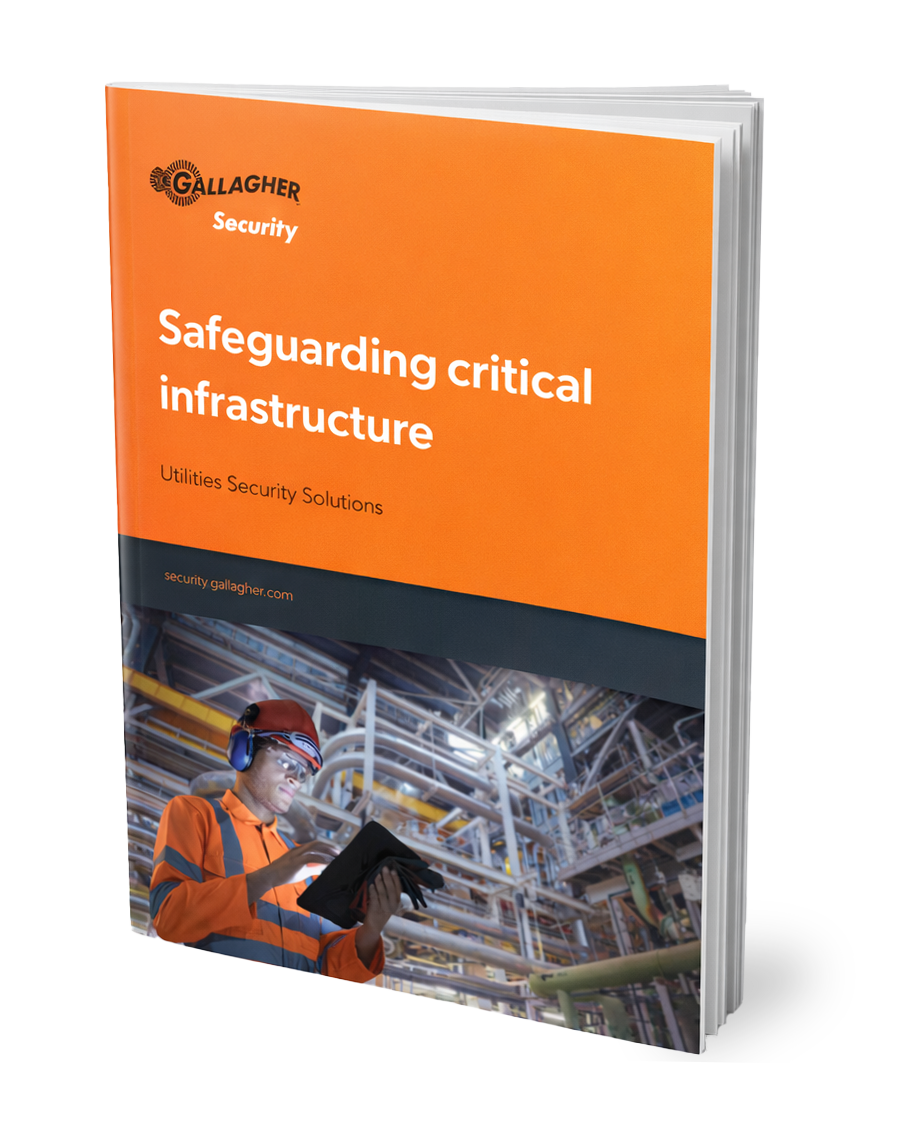
Download the brochure for an overview of Gallagher’s utilities security solutions.
Keeping operations compliant and audit ready
Modern access control takes the pain out of compliance. The system automatically manages all the tedious checks, from logging visitor traceability to enforcing fatigue rules, and creates a perfectly documented, unchangeable record of every entry. When it's time to audit, you quickly and easily generate weeks of evidence without the traditional admin burden.
Continuous monitoring that proves control
Continuous monitoring transforms oversight, ensuring you always prove control over your sensitive zones:
- Real-Time Exception Alerts: Receive immediate notifications for critical events, such as privileged access changes or failed entries at sensitive areas.
- Video Correlation: The system automatically links security events with video footage, enabling instant verification and a drastic reduction in time wasted on false alarms.
Working across large and remote footprints
Working across large and remote footprints requires centralized control to ensure consistency and operational efficiency. Gallagher's Command Centre supports robust multi-site management by enforcing consistent policies and monitoring device health from a single platform. For securing hard-to-reach or small sites, OneLink seamlessly connects remote assets to Command Centre via the cloud, replacing the need for costly VPNs and eliminating the vulnerability of old lock-and-key access.
Better decisions with one platform
A single, unified platform ensures operators and compliance teams always make better, faster decisions:
- One Source of Truth: Centralizing all data provides a single, reliable reference for both security and compliance teams.
- Reduced Error & Training: Consistent workflows across the platform lower training effort and minimize human error.
Contact Energy Case Study: From siloed security to real-time resilience
For Contact Energy, one of New Zealand’s leading providers of electricity, natural gas, broadband, solar and renewable energy, robust and reliable critical infrastructure protection is essential. With a nationwide portfolio of nine power systems, two corporate offices, and two call centers, Gallagher's access control supports their commitment to provide all members of staff with a safe and secure work environment.
Key Outcomes:
- Rapid emergency response: Automated visitor and personnel tracking reduce evacuation 20+ minutes to just a few minutes.
- Increased safety assurance: Access linked to competencies ensures only qualified employees and contractors enter sensitive operational zones.
- Enhanced incident awareness: Video management integration provides immediate visual verification when access events occur or when perimeter breaches are detected.
- Future‑ready protection: Ongoing system updates position Contact Energy to adopt additional features that will further improve operational safety and efficiency.
Take the next step towards 24/7 protection
Critical infrastructure protection is about guaranteeing operational resilience and public confidence. When your essential services are protected by a unified system, your teams can focus on continuity and growth.
Discover more about how our integrated systems enhance high-risk security:
- The Importance of Critical Infrastructure Security
- 5 Perimeter Security Solutions to Safeguard Critical Infrastructure
- Gallagher Security's Industry Trends Report 2025
Ready to see how a proactive approach to access control can transform your compliance? Contact Gallagher Security for a personal consultation today.