A must read for security leaders and decision-makers
Get a clear view of where the security industry is heading with the 2026 Security Industry Trends Report. This year’s research reveals a security industry in recalibration - navigating tighter budgets, broader decision-making, and rising expectations for measurable value.
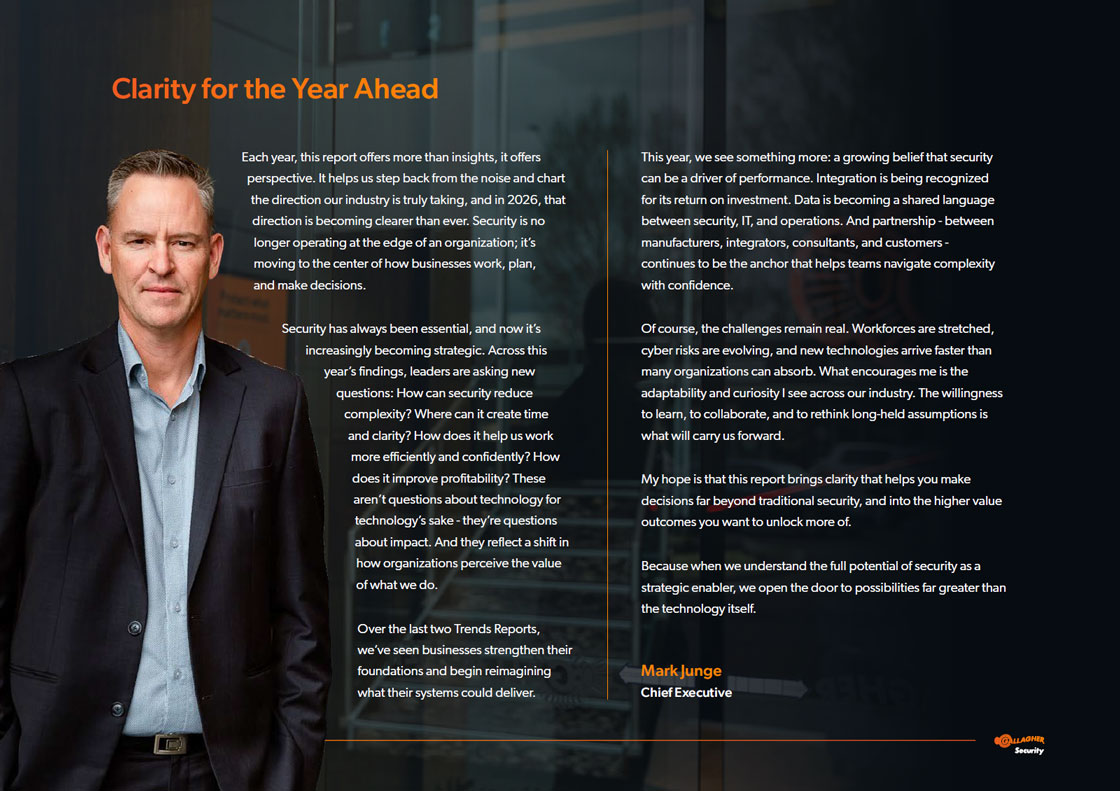
Drawing on global insights, the report explores how security is moving beyond protection to become a strategic driver of performance, helping organizations reduce complexity, improve efficiency, and demonstrate return on investment in an increasingly uncertain environment.
Key Trends in Security for 2026
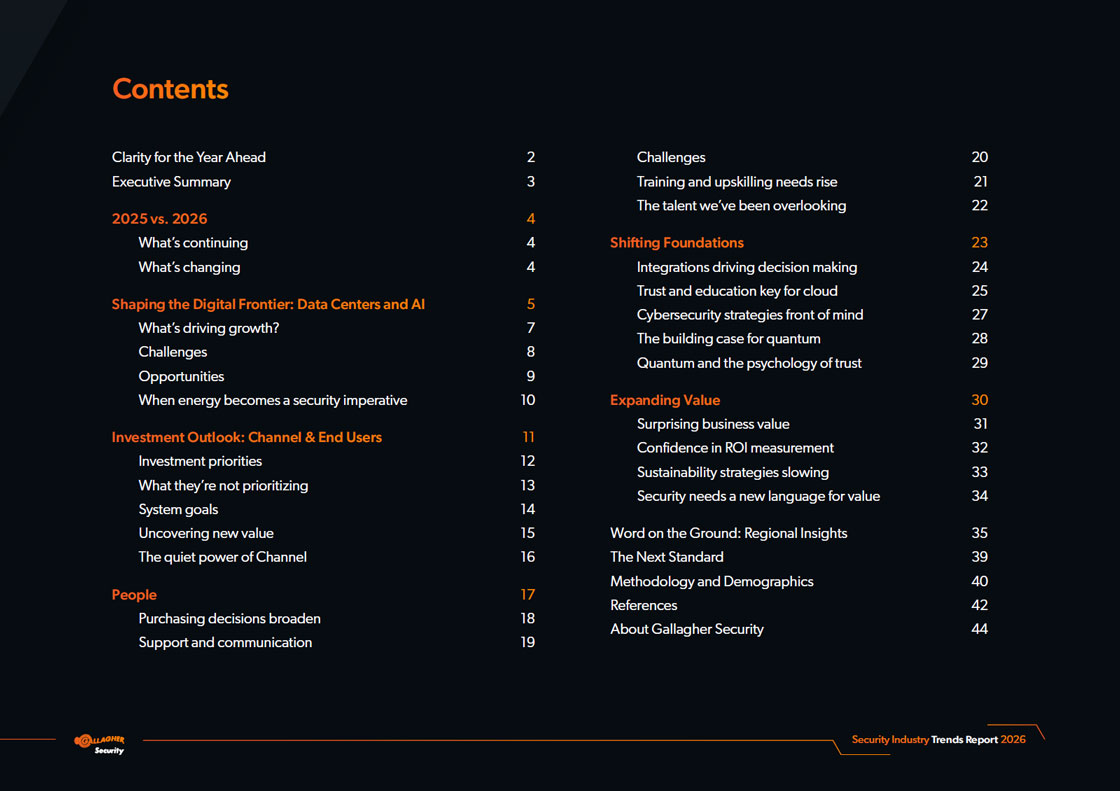
The 2026 report highlights the forces redefining how security systems are evaluated, funded, and deployed. Key insights include:
- Security as a Strategic Business Enabler: Organizations are no longer assessing security solely on protection. Integration and data are repositioning security as a contributor to operational efficiency, resilience, and profitability.
- ROI Takes Center Stage: With budgets under pressure, return on investment has become security’s common language with wider business teams. Leaders are demanding clearer evidence of value, shifting conversations from cost to contribution across the organization.
- Integration Defines System Choice: Integration is now the number one factor influencing security decisions. Connected platforms that unify video, incident management, identity, and data are delivering tangible business value and influencing long-term investment decisions.
- Decision-Making Broadens Beyond Security Teams: IT, facilities, executives, and finance are playing increasingly influential roles in system selection, reflecting deeper convergence between physical security, cybersecurity, and enterprise operations.
- Cloud, AI, and Emerging Technologies Advance - Carefully: Adoption continues, but trust, education, and governance remain critical. Organizations are balancing innovation with control, prioritizing readiness and assurance over speed.
Insights from Industry Experts
The report features perspectives from security leaders across roles and regions, offering real-world insight into how today’s challenges are shaping tomorrow’s solutions. From data centers and energy resilience to workforce challenges and the future of trust, these voices bring depth and context to the data.
Featured in this report:

Quantum and the psychology of trust
Matt Wills, European Technical Manager

Security needs a new language for value
Rachel Wright-St Clair, Chief Operations Officer

Jeff Fields, Director of Government Programs – Americas

The quiet power of channel
Sam Gibbons, Marketing and Engagement Manager – APAC & IMEA
Explore Previous Security Industry Trends Reports
Interested in how security trends have evolved over the years? Check out our previous reports to see how the security landscape has changed and what we predicted for the future.
Frequently Asked Questions (FAQs)
-
What are the main trends identified in the 2026 report?
The 2026 report highlights shifts in the security industry from a sole focus on protection to enabling efficiency and profitability, integration of unified platforms, broader cross-functional decision-making, and a balanced approach to adopting cloud, AI, and other emerging technologies.
-
Who contributed to the 2026 Security Industry Trends Report?
The report includes insights from leading Channel Partners, End Users, security consultants, industry experts, and Technology Partners across the globe.
-
Can I access previous years reports?
Yes, previous years’ reports are available for download on our website, offering insight into how security trends have evolved.
-
What industries are most affected by these trends?
The trends discussed in the report impact a wide range of industries, including data centers, government, manufacturing, and critical infrastructure.
-
How can I apply the findings from the report to my business?
The report offers actionable insights on adjusting security strategies, integrating new technologies, and partnering with the right security providers to address evolving needs.